
SESSIONE DI APERTURA / 20 Maggio 2026 / 09:30 - 11:00
📍Location: Cenobio di Santa Margherita - vedi su Google Maps
Presidenti: Luísa Martins (PT), Andreas Bartl (AT)
SALUTI DI BENVENUTO
Luísa Martins, IRACE President - Técnico, University of Lisbon (PT)
Andreas Bartl, TU Wien (AT)
Paolo Russo, President of Tavolo di Roma (IT)
Leonardo Costagliola, Councillor for Tourism, Municipality of Procida (IT)
OPENING LECTURES
Prof. Andrew Cunningham, Institute of Zoology, Zoological Society of London (UK)
One Health and Sustainability: two sides of the same coin
Read more about this lecture →
Dr. Leonidas Milios, Joint Research Centre, European Commission (ES)
Insights into the upcoming Circular Economy Act – Anticipated instruments and background research by the Joint Research Centre of the European Commission
Read more about this lecture →
One Health and Sustainability: two sides of the same coin
Andrew A. Cunningham - Institute of Zoology, Zoological Society of London
One Health has been rapidly rising up the political and research agendas over recent years, with notable urgency following the recent occurrence of multiple pandemics, including COVID-19 and Mpox in people, H5N1 influenza in multiple species of farmed and wild animal, and amphibian chytridiomycosis. The One Health approach is now widely accepted (if not followed). It has been adopted by governments worldwide, such as through the “G20 declaration on climate change, health and equity, and One Health”, and it has been embedded in the WHO Pandemic Agreement, which was formally adopted by the World Health Assembly’s 194 member states in 2025.
The fundamental drivers of infectious disease emergence in human beings, but also in wildlife and plants, are human behaviours and activities. These activities also underlie the current biodiversity extinction crisis, compounding their negative impacts on public health: in addition to biodiversity being critical for ecosystem function (and, hence, the provision of public goods such as fresh water, food and carbon sequestration), biodiversity loss has, in itself, been identified as the major driver of novel infectious disease outbreaks in people. Further compounding this, is that the main driver of biodiversity loss - livestock production - is a major source of zoonotic pathogens in itself and is an important bridge for zoonotic spill-over from wildlife.
Until now, the One Health focus has been on infectious diseases, particularly those that are zoonotic, but as defined by the One Health High Level Expert Panel, One Health encompasses so much more than infectious disease. This is particularly pertinent when it comes to planetary health and sustainability, with the human-mediated global loss of wildlife habitats and biodiversity causing the collapse of ecosystem services that support life on Earth. Again, livestock production is the fundamental driver of this collapse, driven by the combined effects of a growing human population and rising global wealth. It doesn’t have to be this way, however. An urgent and fundamental change in our food systems is required to improve planetary and public health and to ensure the sustainability of humanity.

Prof. Andrew Cunningham is a veterinarian who has worked at the Zoological Society of London since 1988, initially as veterinary pathologist and latterly as Deputy Director of Science. Andrew’s research includes investigating infectious and non-infectious disease threats to wildlife conservation, including the drivers of disease emergence and zoonotic spill-over. Andrew discovered a new epidemic ranaviral disease of amphibians in Europe and he published the first definitive report of the global extinction of a species by an infectious disease. He has led several international and multi-disciplinary wildlife disease research projects, including the investigation of vulture declines in South Asia and the international team that discovered the chytrid fungus that is currently causing global amphibian population declines and extinctions, for which he was awarded a medal by the CSIRO in Australia. In 2010, he won a Royal Society Wolfson Research Merit Award for his work on zoonotic viruses in African bats and in 2016 he was elected a Fellow of the Royal College of Veterinary Surgeons. In 2025 he was awarded the British Veterinary Association’s Advancement of Veterinary Science award. He was a first term member of the Quadripartite’s One Health High Level Expert Panel, and a member of the WHO/Europe One Health Technical Advisory Group. He currently sits on the British government’s Wildlife Disease Core Group and on their One Health Vector Borne Disease surveillance group.
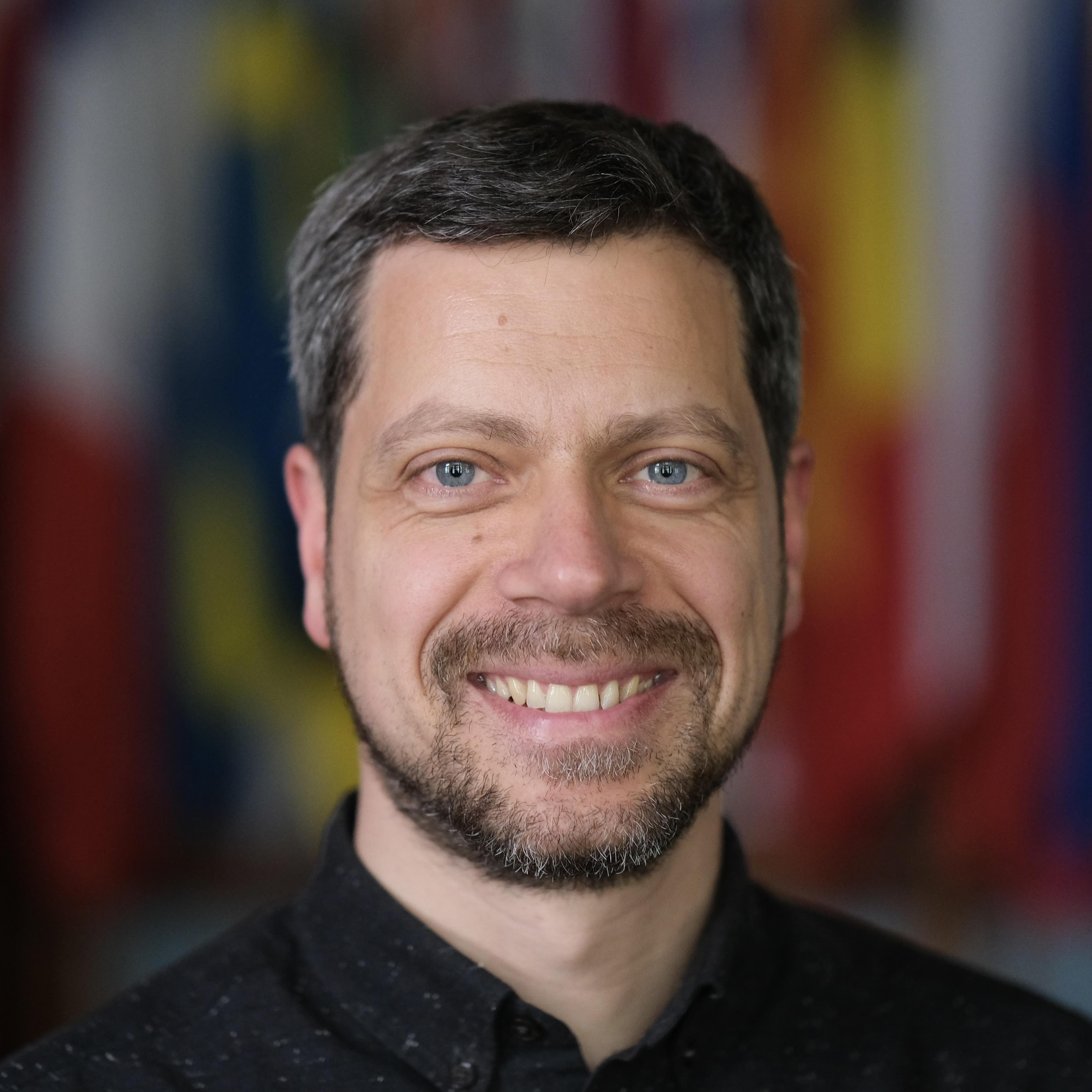
Dr. Leonidas Milios is a Scientific Project Officer at the Joint Research Centre (JRC) of the European Commission. Leonidas’ current research activity at the JRC is tightly related to the multiple facets of circular economy transition, including product and waste policy impact assessments, the definition of End-of-Waste criteria under the Waste Framework Directive, as well as recyclability assessment of packaging under the Packaging and Packaging Waste Regulation.
Prior to his current role, Leonidas was engaged for several years in academia, as well as in various consulting roles, both in the public and private sector within the area of resources and waste management.
Leonidas holds a PhD in Industrial Environmental Economics from Lund University, with a strong focus on circular economy policy analysis, and a MSc Degree in Environmental Engineering and Sustainable Infrastructure from the Royal Institute of Technology (KTH).
Insights into the upcoming Circular Economy Act
Anticipated instruments and background research by the Joint Research Centre of the European Commission
Leonidas Milios - Joint Research Centre (JRC) of the European Commission
The Circular Economy has been strategically promoted by the European Commission for over a decade with the explicit aim to lower environmental pressures of European production and consumption and to increase economic resilience by reducing reliance on virgin materials and unstable global supply chains. Against this backdrop, the upcoming Circular Economy Act (CEA) aims to tackle several structural challenges currently at the centre of the EU policy debate. Among others, issues to be urgently addressed include material security and critical raw materials; the fragmentation of the single market, lacking harmonised criteria to determine when waste ceases to be waste and becomes a product; and closing the price gap between virgin and recycled materials.
The anticipated CEA, expected to be proposed by the third quarter of 2026, would constitute a central pillar of the EU Clean Industrial Deal and Competitiveness Compass. The Commission has indicated that measures in the CEA could be based on three pillars: amending the Waste Framework and Landfill Directives; amending the Waste Electrical and Electronic Equipment (WEEE) Directive; and considering further additional measures. The Commission announced that this initiative would seek to double the EU's circular material use rate to 24 % by 2030 by making circularity a central element of the single market, industrial resilience, and strategic autonomy. The significance of the CEA lies in its potential to address the triple challenge of economic security, environmental crisis, and industrial competitiveness.
The Joint Research Centre, the dedicated research service of the European Commission, has actively contributed towards the formulation and assessment of potential measures that could form part of the CEA, especially on the revisions of the WEEE and Waste directives, and performing the impact assessment of a variety of envisaged measures in the CEA. Additional focus in this session will be put on the presentation of JRC work related to End-of-Waste criteria (e.g. plastics, aggregates from mineral construction and demolition waste) and potential treatment requirements for improving the recovery of critical raw materials from WEEE.
